Black Friday week

Black Friday week

📄 Digital book in PDF · read it on your phone or print it

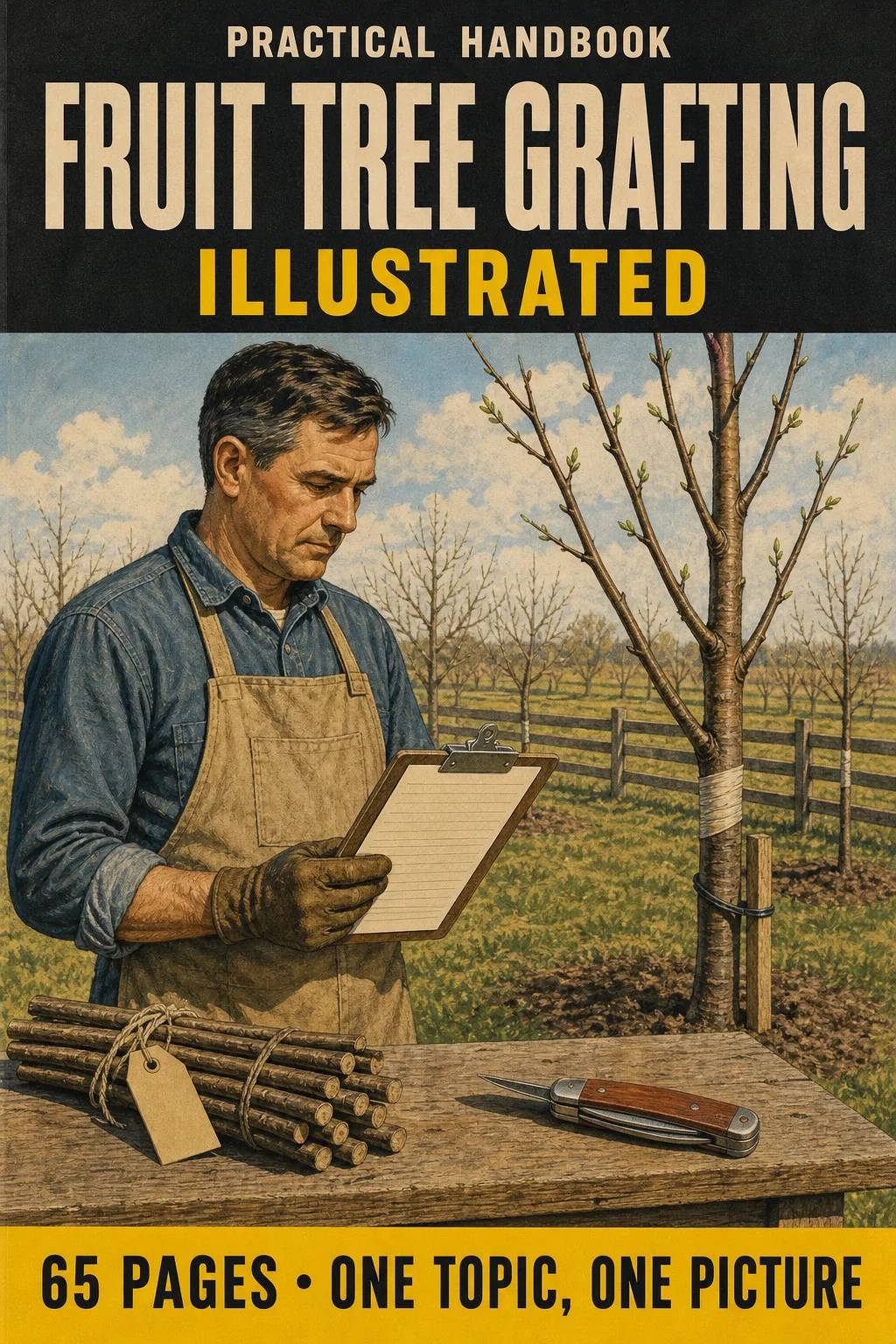
Fruit Tree Grafting in Drawings Know Where Every Cut Goes Before You Touch the Tree

Whip and tongue, cleft and bark grafts, plus chip budding, one topic per page: the drawing first, then the sizes and dates to remember. For US home growers, from your first graft to the ones that didn't take. 65 illustrated pages.

LEARN GRAFTING THIS WAY

🔒 Secure checkout · PDF by email · 30-day guarantee

Every topic, its own pageEach cut drawn, with the explanation right beside it
65 illustrated pages9 parts, from what a graft really is to your first-season plan
Up-to-date sourcesCooperative Extension grafting guides from land-grant universities and the USDA Plant Hardiness Zone Map
PDF by emailFormat

Look Inside the Book

Every page has one big drawing and a box with the measurements and steps you need to know:

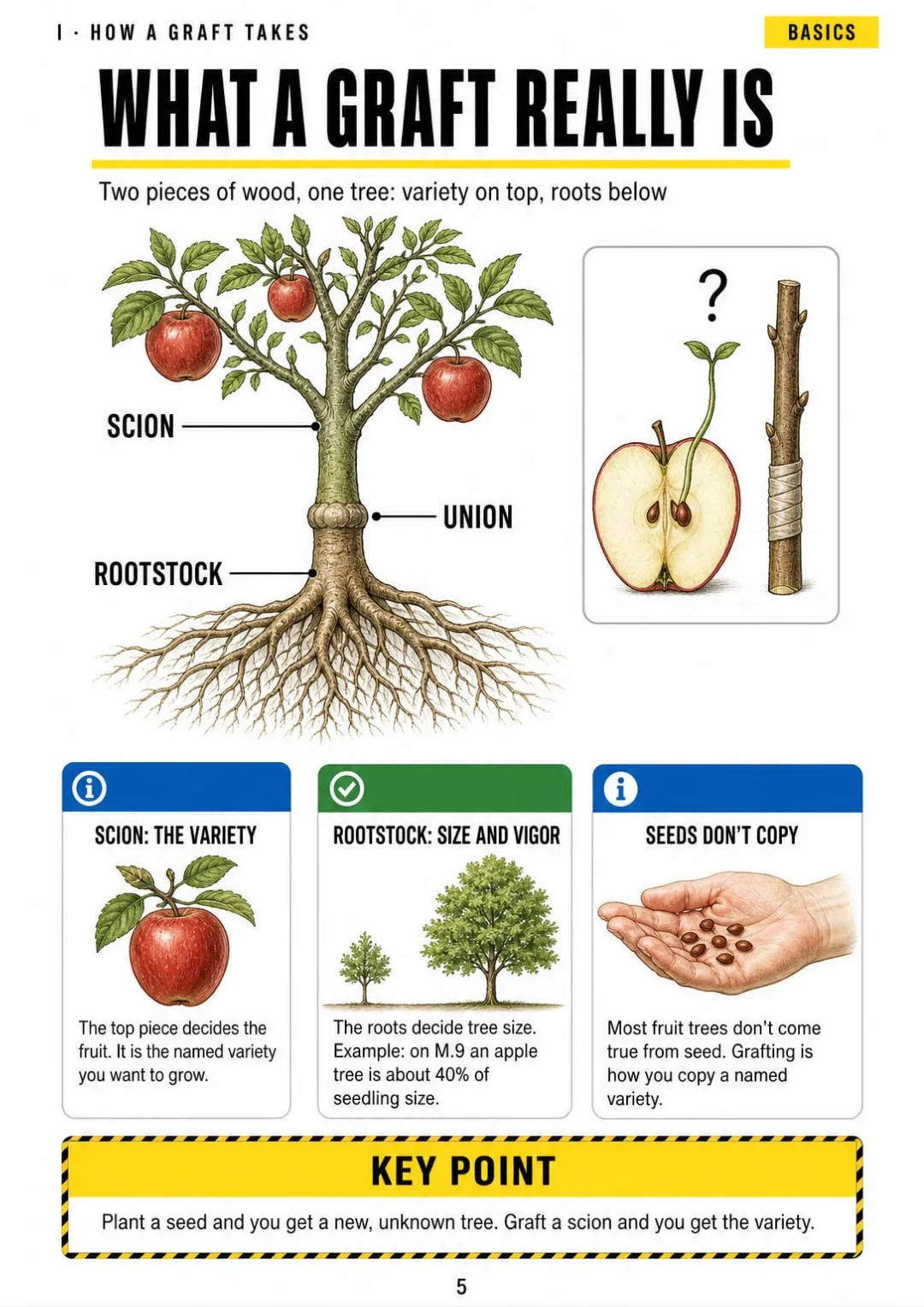
Scion = the variety you want; rootstock = tree size. Seeds don't copy the variety.
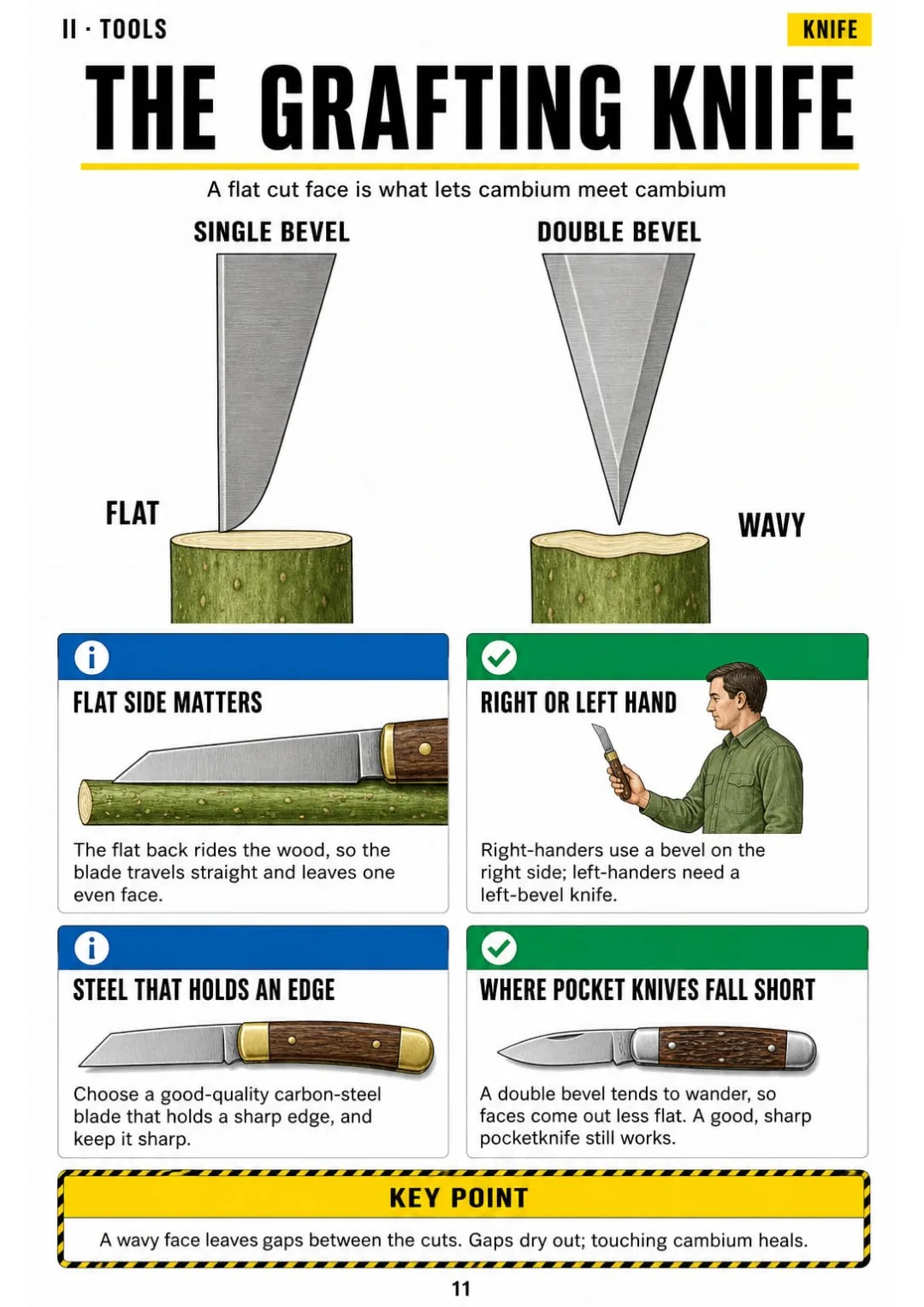
Single bevel vs double bevel, drawn edge-on: one leaves a flat face, the other a wavy one
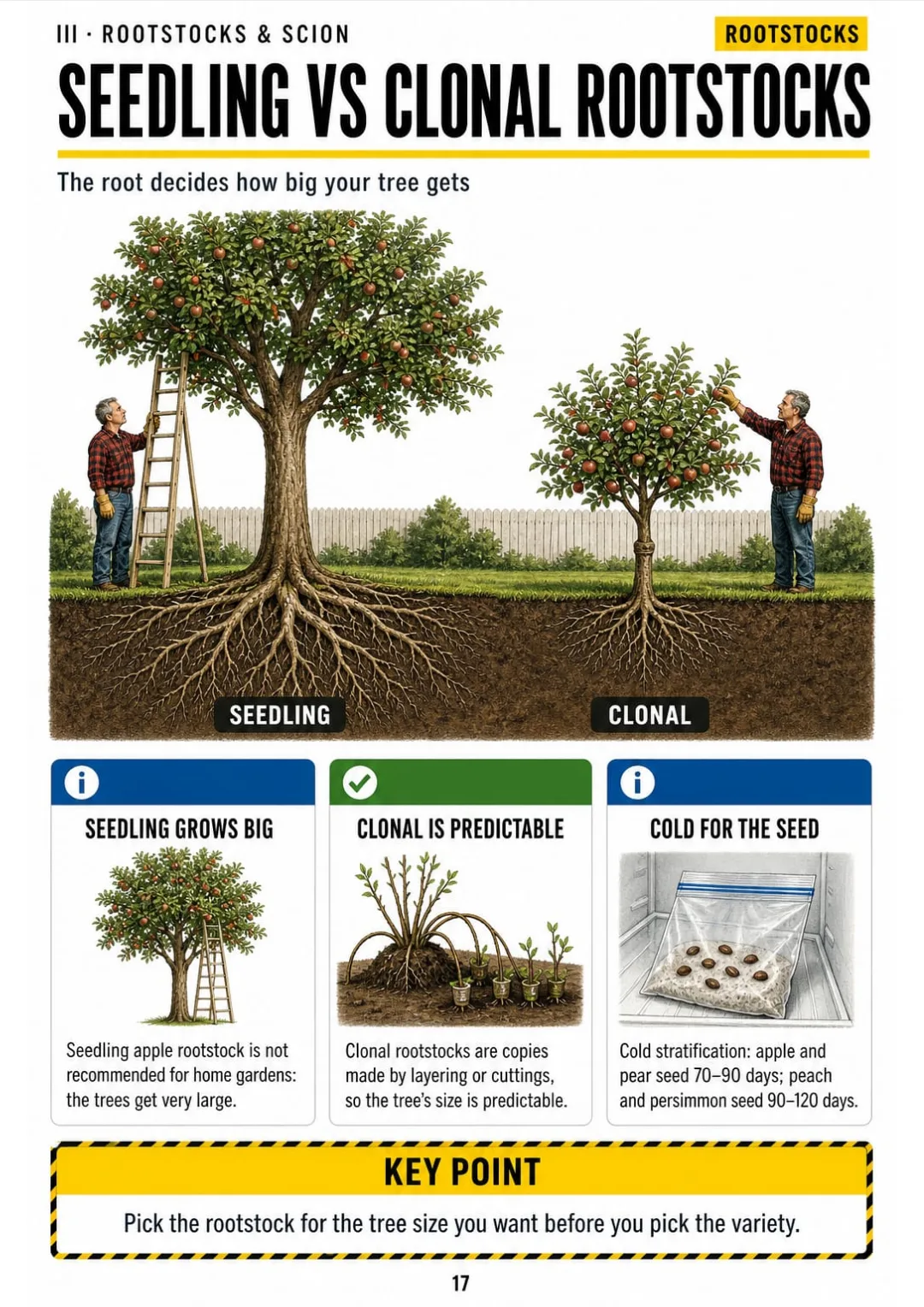
Seedling roots grow very large trees and need at least 1 year to reach grafting size; clonal roots give a predictable size.
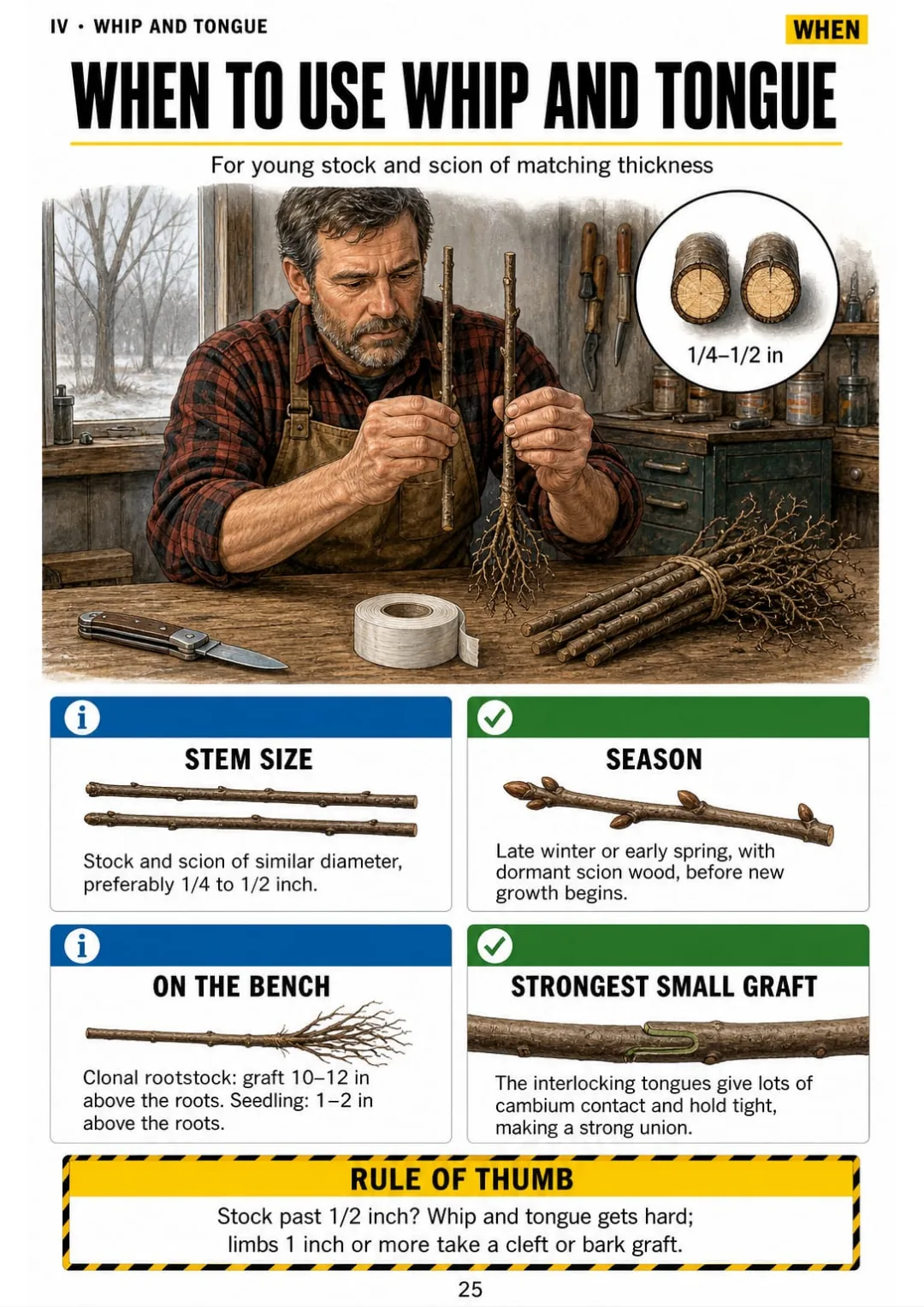
Whip and tongue: stems of similar diameter, 1/4 to 1/2 inch, grafted while dormant.
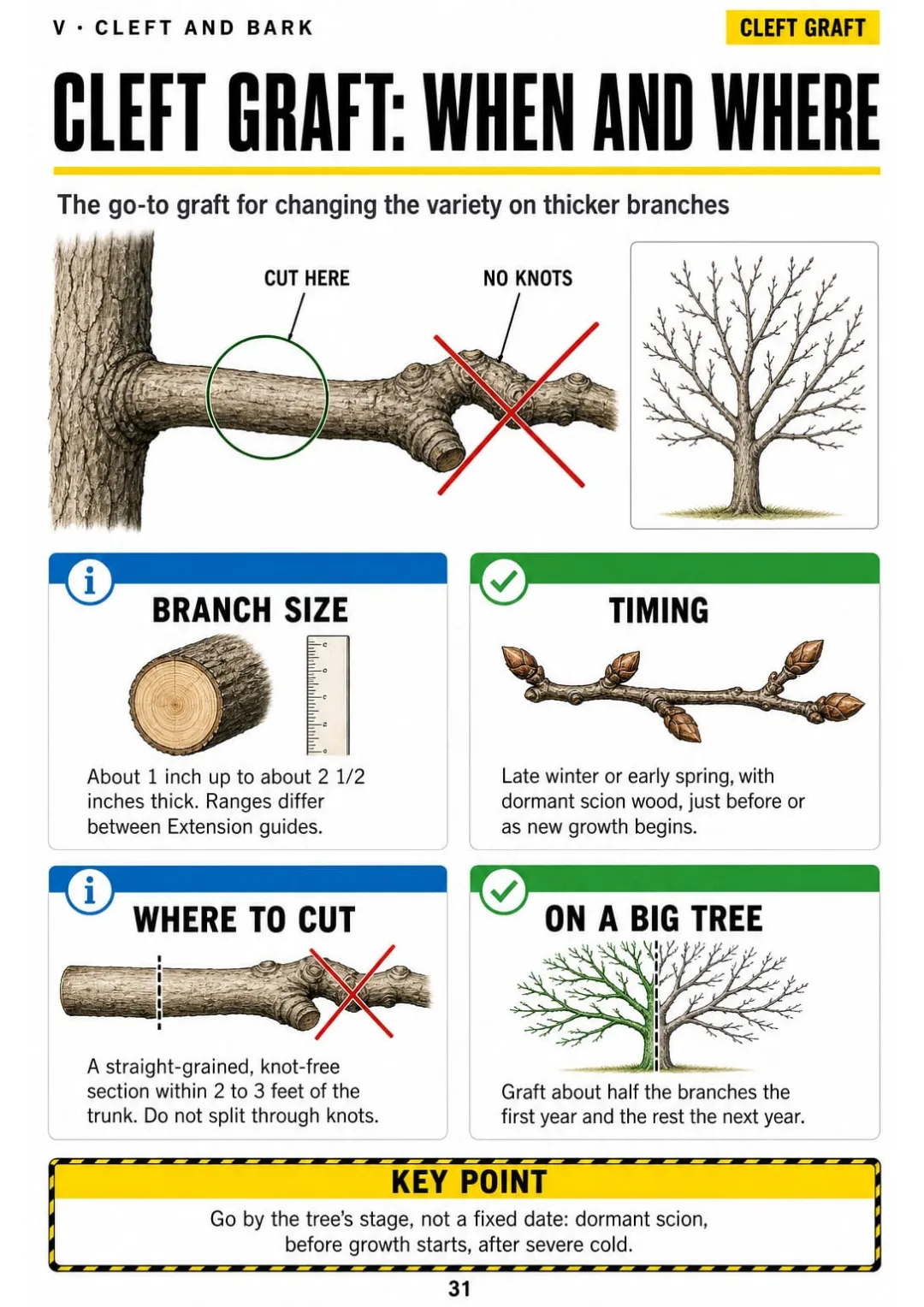
Cleft graft: branches about 1 to 2 1/2 inches, late winter or early spring, no knots.
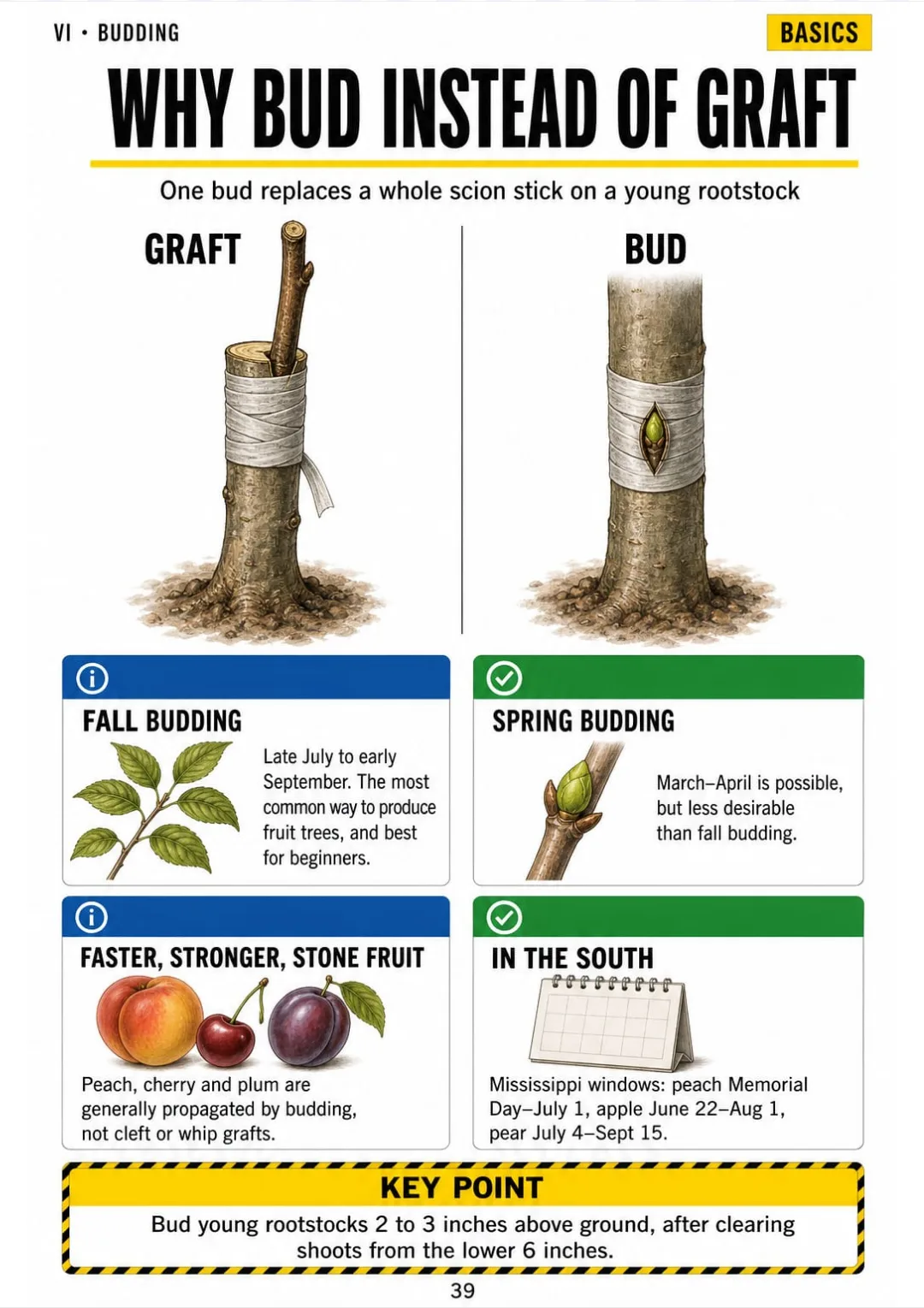
Fall budding, late July to early September: the most common way to propagate fruit trees
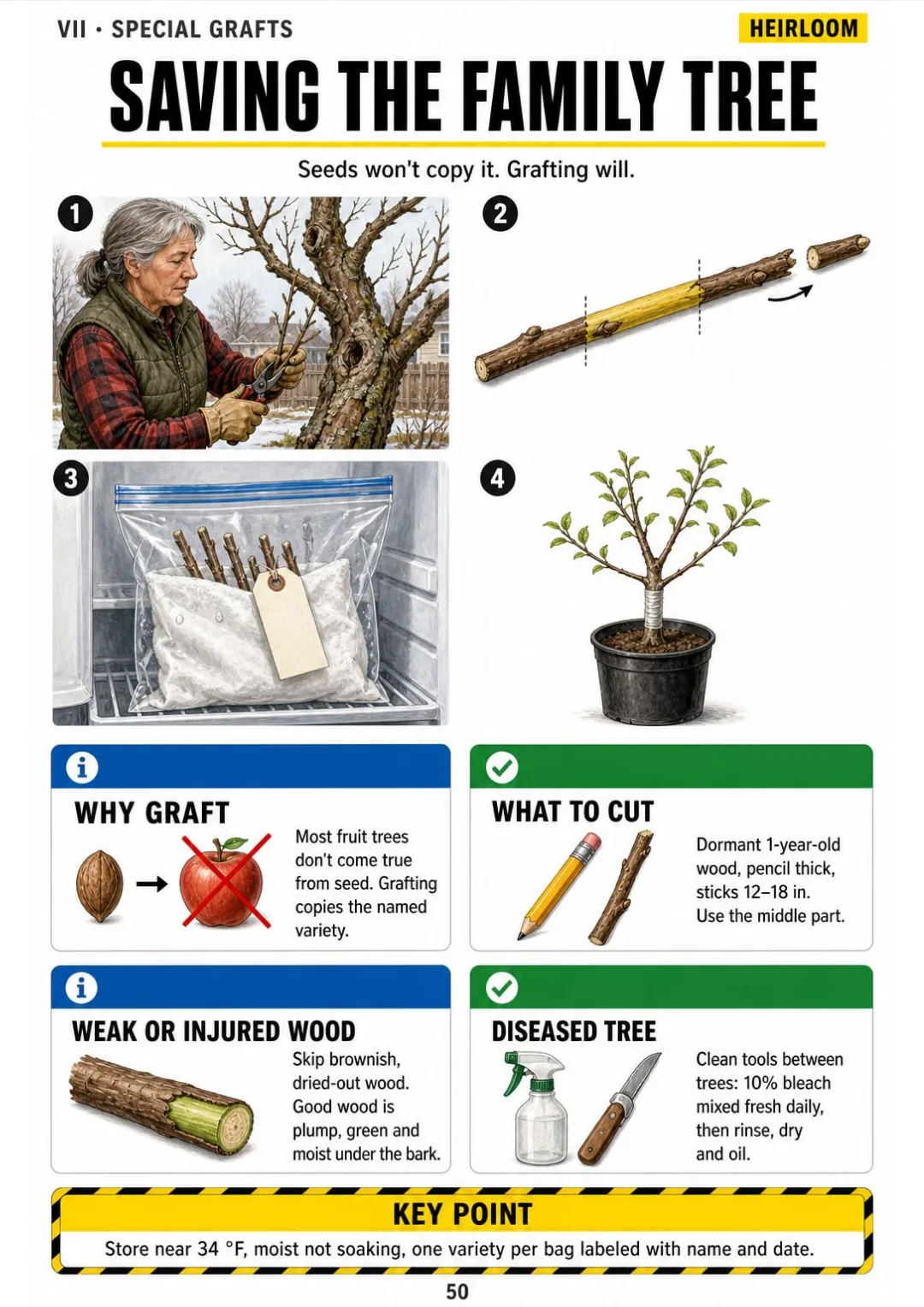
Saving an heirloom: dormant, pencil-thick, 12–18 in sticks, middle buds, stored near 34 °F.
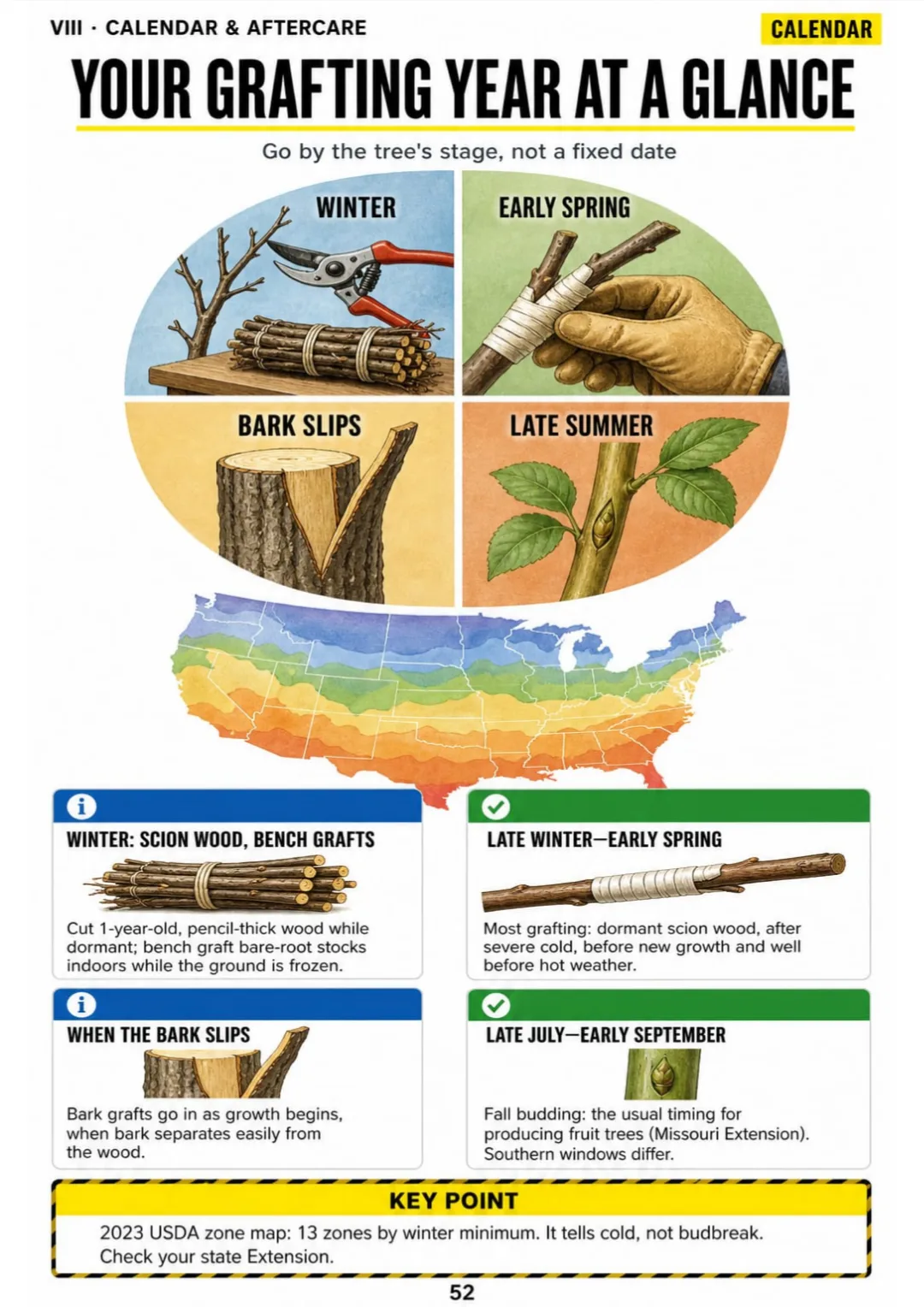
Scion wood in winter, grafts in early spring, bark grafts when bark slips, budding late summer.

Swipe to see more →

These are real pages from the book. The table of contents is the full one: 9 parts and 61 topics.

The Problem Isn't You. It's How It Was Explained to You.

Last spring you made your first whip and tongue grafts. By June, most of the scions were brown and dry, and you couldn't tell which step went wrong.

The guide you followed explains it in paragraphs: cambium, alignment, callus, dormancy, all in running text. Not one drawing of where the two green lines have to meet.

Seedling roots grow very large trees and need at least 1 year to reach grafting size; clonal roots give a predictable size.

Here, the answer is one page: the diagnosis page. A cut-open union drawn next to the most frequent causes: cambium not lined up, scion wood that dried out, a wrap that came loose.

Storing scion wood, the whip and tongue, the cleft graft, chip budding and the season calendar each get their own page too.

You look, you find the step that failed, and next spring you make that cut differently.

COMPARE FOR YOURSELF

Same Topic, Two Ways to Learn It

THIS
  • The manual: line after line after line
  • Knife bevels explained with words only
  • You get to the tree still unsure
The grafting knife is characterized by a blade of high-carbon or stainless steel, ground with either a single bevel or a double bevel, the selection of which exerts a considerable influence upon the quality of the cut surface obtained. A single-bevel blade, being flat on one face, will tend to produce a planar cut, whereas a double-bevel blade, owing to its symmetrical geometry, may produce a slightly irregular surface, which consequently reduces cambial contact between scion and rootstock.
FOR THIS
  • The knife edge in one drawing
  • Single and double bevel side by side in a box
  • You see it and you get it
Single bevel vs double bevel, drawn edge-on: one leaves a flat face, the other a wavy one
CONTENTS

Take a Look at the 9 Parts and 61 Topics

How a graft takes, tools, rootstocks and scion wood, whip and tongue, cleft and bark grafts, budding, special grafts, calendar and aftercare, and why grafts fail: 65 pages, all illustrated.

IHow a Graft Takes · pp. 5-10
  1. What a Graft Really Is
  2. The Cambium: The Thin Green Line That Decides Everything
  3. How the Union Heals, Week by Week
  4. Which Trees Graft onto Which
  5. Up Is Up: Bud Polarity
  6. Temperature and Timing Basics
IITools and Materials · pp. 11-16
  1. The Grafting Knife
  2. Sharpening to a Flat, Clean Edge
  3. Cutting Safely Toward Nothing
  4. Tapes, Bands and Wraps
  5. Sealants and Wax
  6. Clean Tools Between Trees
IIIRootstocks and Scion Wood · pp. 17-24
  1. Seedling vs Clonal Rootstocks
  2. Apple Rootstocks by Tree Size
  3. Pear, Stone Fruit and Nut Rootstocks
  4. Picking Good Scion Wood
  5. When to Cut Scion Wood
  6. Storing Scion Wood in the Fridge
  7. Is My Scion Wood Still Alive?
  8. Matching Scion and Stock Thickness
IVWhip and Tongue · pp. 25-30
  1. When to Use Whip and Tongue
  2. Step 1: The Long Sloping Cut
  3. Step 2: The Tongue
  4. Step 3: Interlocking the Tongues
  5. Step 4: Wrap, Seal, Label
  6. Splice Graft: The Simpler Cousin
VCleft and Bark Grafting · pp. 31-38
  1. Cleft Graft: When and Where
  2. Cleft Step 1: Saw and Split the Stock
  3. Cleft Step 2: Cut the Wedge Scion
  4. Cleft Step 3: Set Two Scions
  5. Cleft Step 4: Seal Every Opening
  6. Bark Graft: When the Bark Slips
  7. Bark Graft Step by Step
  8. Supporting New Shoots on Big Grafts
VIBudding: Chip and T · pp. 39-45
  1. Why Bud Instead of Graft
  2. Making a Bud Stick
  3. Chip Budding Step by Step
  4. Wrapping a Chip Bud
  5. T-Budding Step by Step
  6. Chip or T? Choosing by Season
  7. After Budding: Check, Release, Cut Back
VIISpecial Grafts and Projects · pp. 46-51
  1. Bridge Graft: Saving a Girdled Trunk
  2. Inarching: New Roots for an Old Tree
  3. Topworking: Changing an Old Tree's Variety
  4. The Multi-Variety Tree
  5. Saving the Family Tree
  6. Pecan and Walnut: Grafts for Warm Wood
VIIICalendar and Aftercare · pp. 52-58
  1. Your Grafting Year at a Glance
  2. Bench Grafting Indoors
  3. Planting a New Bench Graft
  4. The First 6 Weeks
  5. Removing Wraps and Ties
  6. Suckers and Competing Shoots
  7. Protecting Young Grafts
IXWhy Grafts Fail and Final Review · pp. 59-65
  1. Diagnosis Page: Why It Didn't Take
  2. Leafed Out, Then Died in June
  3. Reading a Cut-Open Union
  4. Ten Most Frequent Mistakes
  5. Pre-Graft Checklist
  6. Choose the Graft by Branch Size
  7. Your First-Season Plan

One Page, One Topic, All Clear

Think of it this way:

It's a cold morning in early spring. The scion wood has been in the fridge since winter, the knife is sharp, and you're standing at the rootstock about to make the first cut.

You open the book to the whip and tongue page. The long sloping cut, the tongue, the two pieces locking together and the wrap, drawn in that order, with the stem size it works for: 1/4 to 1/2 inch.

Cleft graft: branches about 1 to 2 1/2 inches, late winter or early spring, no knots.

Same with the cleft graft, the bark graft, chip budding, the bridge graft and your grafting year at a glance: each one on its own page.

Fruit Tree Grafting Illustrated is 9 parts and 61 topics, all drawn, and at the end a diagnosis page for grafts that didn't take, a pre-graft checklist and your first-season plan.

What you see drawn, you don't have to memorize.

What's Inside Fruit Tree Grafting Illustrated:

Ipp. 5-10

How a Graft Takes

What a graft is, the cambium line, how the union heals week by week, which trees graft onto which, bud polarity and timing.

IIpp. 11-16

Tools and Materials

The grafting knife, sharpening to a flat edge, cutting safely, tapes and bands, sealants and wax, and cleaning tools between trees.

IIIpp. 17-24

Rootstocks and Scion Wood

Seedling vs clonal rootstocks, apple rootstocks by tree size, pear, stone fruit and nut stocks, and picking, cutting, storing and testing scion wood.

IVpp. 25-30

Whip and Tongue

When to use it, the long sloping cut, the tongue, interlocking, wrapping and labeling, plus the simpler splice graft.

Vpp. 31-38

Cleft and Bark Grafting

The cleft graft in four steps, the bark graft when the bark slips, and supporting new shoots on big grafts.

VIpp. 39-45

Budding: Chip and T

Why bud instead of graft, making a bud stick, chip and T-budding step by step, choosing by season and what to do after.

VIIpp. 46-51

Special Grafts and Projects

Bridge grafts for girdled trunks, inarching, topworking an old tree, the multi-variety tree, saving the family tree, and pecan and walnut.

VIIIpp. 52-58

Calendar and Aftercare

Your grafting year at a glance, bench grafting indoors, planting a bench graft, the first six weeks, removing wraps, suckers and protection.

IXpp. 59-65

Why Grafts Fail and Final Review

A diagnosis page, the June die-off, reading a cut-open union, the ten most frequent mistakes, a pre-graft checklist and your first-season plan.

At the end of the book: A diagnosis page for failed grafts, a pre-graft checklist and a chart to choose the graft by branch size.
Plus: 2 Free Books

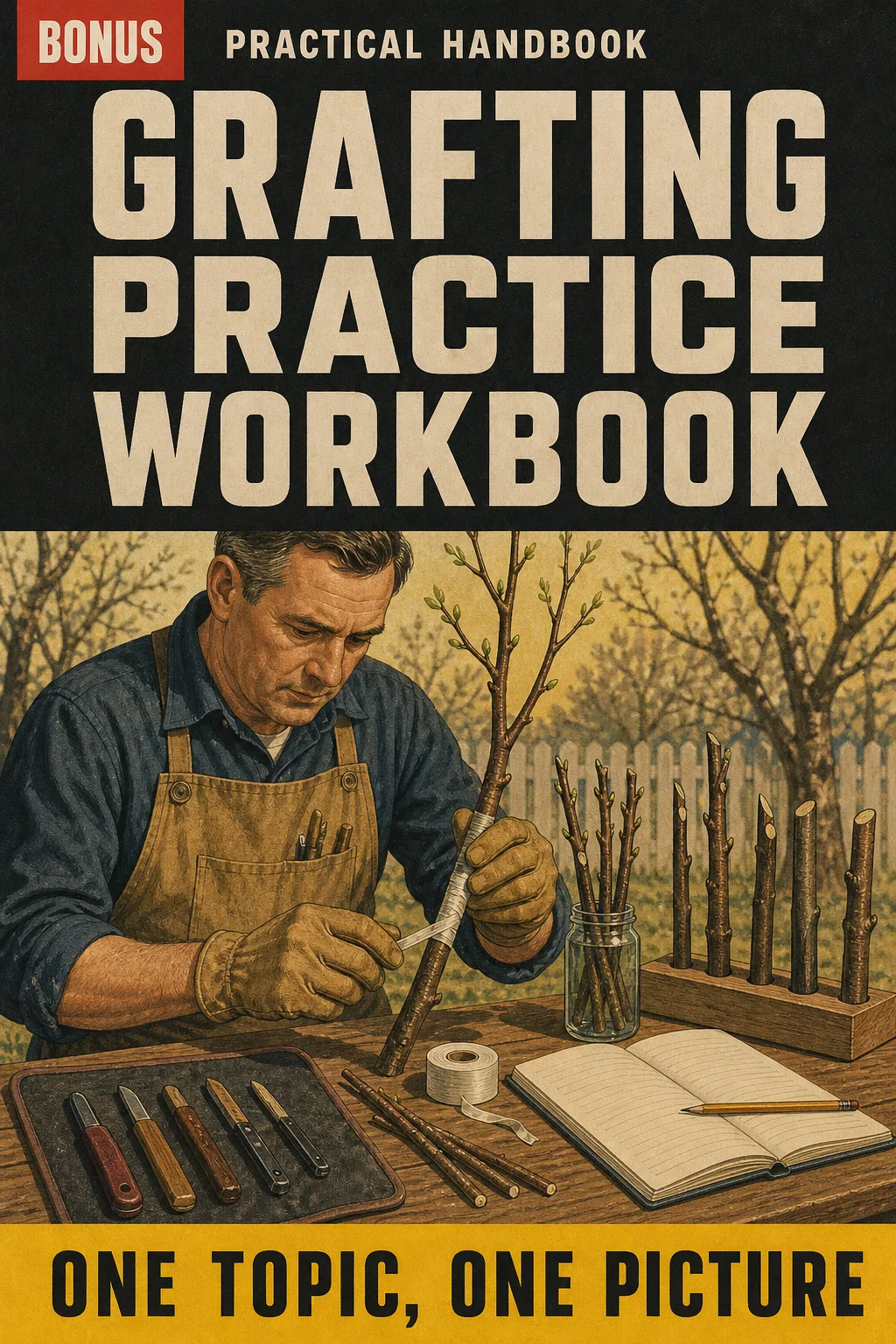
Grafting Practice Workbook

BONUS 1: «Grafting Practice Workbook»

Value on its own: US$ 17.90

Drawn drills to spot a bad cut, line up the cambium and pick the right graft for each branch size before you cut into your own tree.

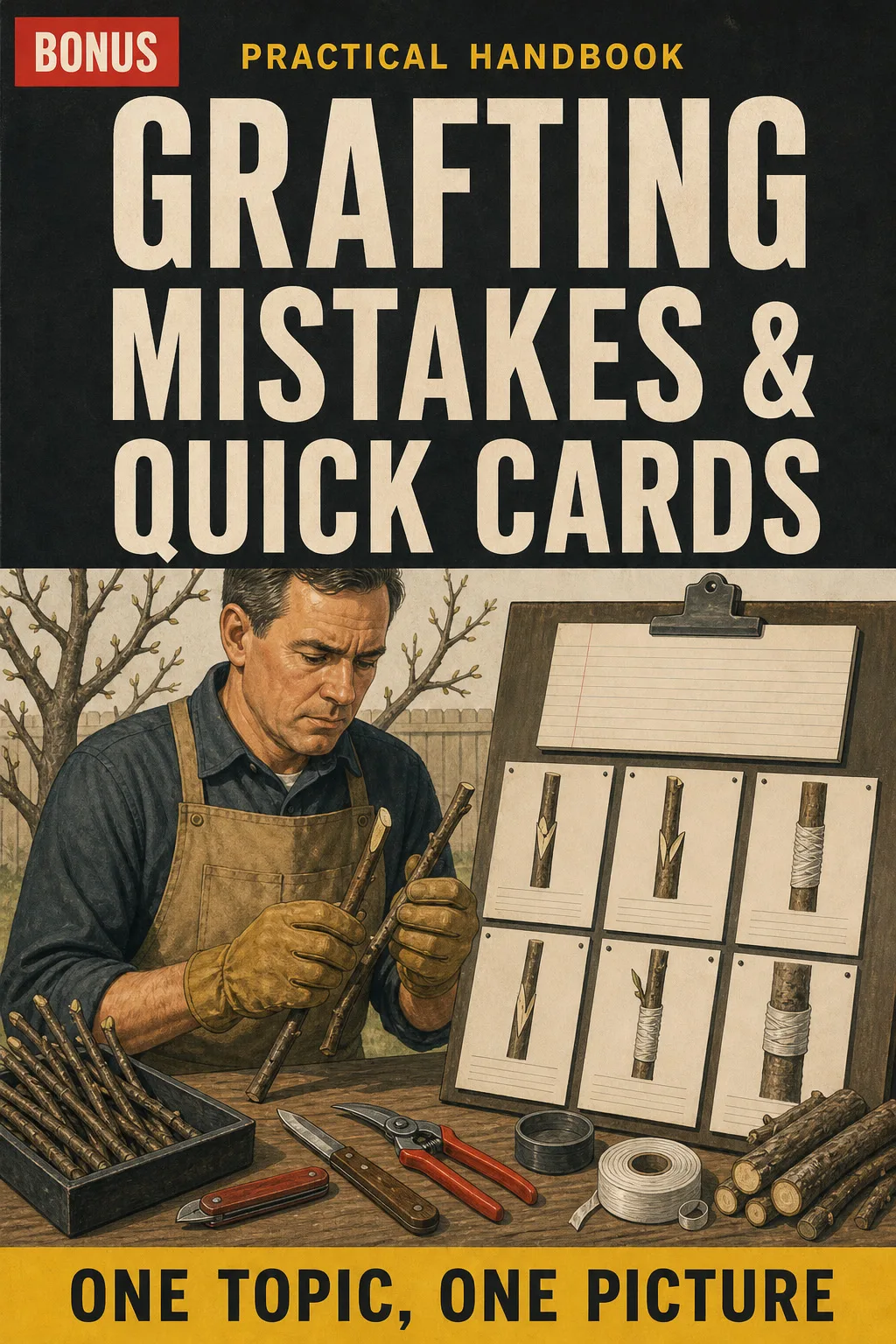
Grafting Mistakes & Quick Cards

BONUS 2: «Grafting Mistakes & Quick Cards»

Value on its own: US$ 14.90

Printable cards for the shed: the steps of each graft and the most common mistakes, so you can check at a glance with the knife in your hand.

Black Friday week · ends Nov 30

Fruit Tree Grafting Illustrated with 2 Free Books

  • Fruit Tree Grafting Illustrated: 65 illustrated pagesUS$ 63
  • BONUS 1: Grafting Practice WorkbookUS$ 17.90
  • BONUS 2: Grafting Mistakes & Quick CardsUS$ 14.90
  • High-resolution PDF to printIncluded
Total value US$ 95.80
BLACK FRIDAY PRICE:
US$ 27
You save US$ 68.80
YES, I WANT FRUIT TREE GRAFTING ILLUSTRATED FOR US$ 27

📄 This is a digital PDF book sent to your email: nothing is printed or shipped.

Secure purchaseEncrypted payment30-day guarantee

PDF by email: We email you Fruit Tree Grafting Illustrated as a PDF, together with the two free books. It's a single payment: no installments, no extra charges.

Who This Book Is For

You're learning to graft this winter

You're learning to graft this winter

Each graft drawn in the same order, so you know what the cuts look like before you touch your own tree.

Spring is close and the scion wood is ready

Spring is close and the scion wood is ready

The calendar, the cuts and a pre-graft checklist on pages you can print and take out to the tree.

You've grafted before and some didn't take

You've grafted before and some didn't take

A diagnosis page and the most frequent mistakes, drawn, so you can look at a failed union and see what went wrong.

Everything You Get Today

US$ 95.80US$ 27
YES, I WANT FRUIT TREE GRAFTING ILLUSTRATED FOR US$ 27

📄 This is a digital PDF book sent to your email: nothing is printed or shipped.

30DAYS
GUARANTEE

30-Day Guarantee

Try Fruit Tree Grafting Illustrated for 30 days, bonus books included.

We refund everything if the file won't open, if the book isn't what you see here, if you were charged twice or if the email doesn't arrive. Just email us.

You pay once. No subscriptions.

Frequently Asked Questions

Is it for me if I've grafted before and some didn't take?

Yes. It starts from the basics, but it also has a diagnosis page, the June die-off, reading a cut-open union and the most frequent mistakes, all drawn.

Where does the content come from?

From the grafting and propagation guides published by Cooperative Extension services at US land-grant universities, plus the USDA Plant Hardiness Zone Map for the calendar. Dates and rootstocks vary by region, so the book reminds you to confirm them with your state's extension office.

Is this official material?

No. It's an independent illustrated book. It cites those sources descriptively and isn't endorsed by any of them.

Does it replace a grafting class or workshop?

No. It's study material to keep at hand. Hands-on practice and your local extension office are still the best complement.

Does it work for my zone and climate?

Yes. It's written for US home growers, and the grafting calendar is laid out by USDA hardiness zone. A late frost or a hot summer can shift the window, so the book reminds you to confirm local dates with your state's extension office.

When and how do I get it?

As a PDF by email, sent to the address you enter at checkout.

Do I have to pay every month?

No. It's a one-time payment.

Can I have it on paper?

It's a PDF sent by email, not a printed book. But it's designed to print: print the pages you need on your home printer and keep them in the shed, next to the knife.

How does the refund work?

You have 30 days. We refund everything if the file won't open, if the book isn't what you see on this page, if you were charged twice or if the email doesn't arrive: just email us.

Before You Close This Page

No more rewatching videos that each cut a different way.

The whip and tongue: you see it drawn, and that's it.

You get to the tree knowing where every cut goes.

Drawings make studying faster.

The book is right below.

One-time payment: US$ 27 · Guarantee: 30 days · PDF by email

YES, I WANT FRUIT TREE GRAFTING ILLUSTRATED FOR US$ 27

📄 This is a digital PDF book sent to your email: nothing is printed or shipped.